Stone Applications In Urban Design are reshaping how cities feel, move, and endure. Stone is no longer limited to monuments or grand civic entrances. It now appears in paving, seating edges, drainage channels, retaining walls, transit platforms, and shaded courtyards. Each application affects comfort, accessibility, maintenance, and local identity.
UN-Habitat’s World Cities Report 2022 states that 56% of the world’s population lived in urban areas in 2021. That share may reach nearly 70% by 2050. More people will depend on public spaces every day. Materials must therefore perform under constant footsteps, heat, rain, pollution, and repair demands. The U.S. Geological Survey’s Mineral Commodity Summaries also tracks dimension stone as an established construction material, reminding designers that extraction and supply remain practical concerns. Beautiful surfaces still have environmental costs.
“First life, then spaces, then buildings—the other way around never works,” wrote urban designer Jan Gehl in Cities for People. His principle helps clarify stone’s role. A stone plaza should support lingering, movement, shade, and social contact before it becomes a visual statement. Consider a cool granite bench beside a permeable joint, or rough paving that slows bicycles near a school entrance. Small details matter.
This article examines ten practical strategies for Stone Applications In Urban Design. It considers material selection, climate response, inclusive access, lifecycle value, and detailing. Some recommendations will not fit every city. That is the point. Local geology, budgets, skills, and public habits can change the answer. Stone can endure, but poor design can make it uncomfortable, wasteful, or surprisingly fragile.
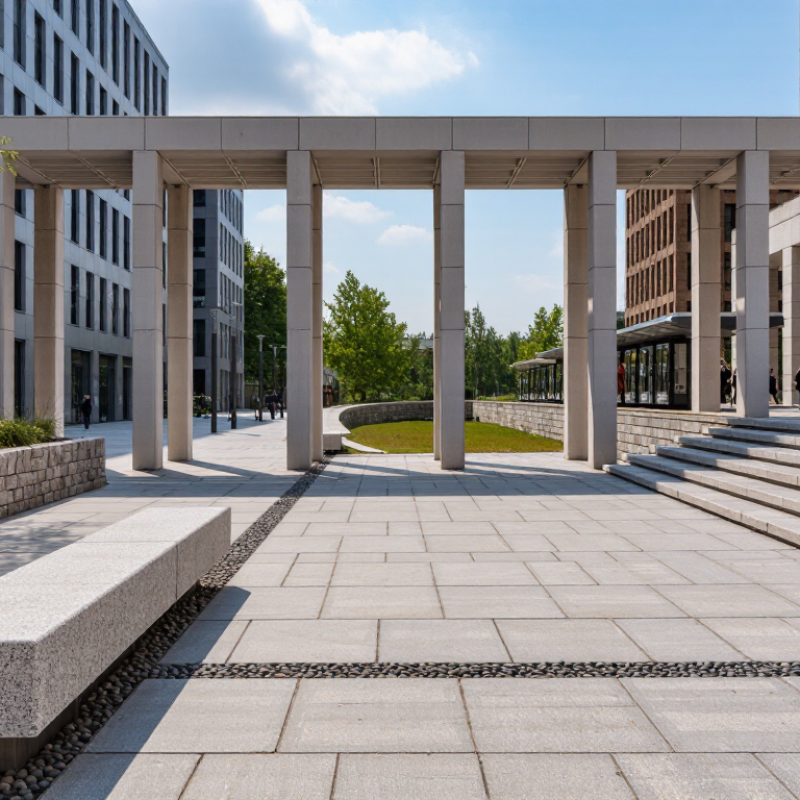
10 Tips for Stone Applications in Urban Design
Understanding stone types starts with performance, not appearance. Granite suits steps, kerbs, and heavy-traffic plazas because it resists abrasion and freeze-thaw cycles. Limestone offers softer color and easier carving, but acidic rain can weaken exposed surfaces. Sandstone creates warmth around courtyards, yet its pore structure demands careful drainage. Slate works well for paving accents and wall cladding, provided its layers remain stable. Test before specifying. Water absorption, slip resistance, compressive strength, and thermal movement should be checked against project conditions.
Urban designers also need to understand scale and supply. The U.S. Geological Survey estimated U.S. crushed stone production at about 1.9 billion metric tons in 2023. That figure describes aggregate, not architectural stone, but it shows the enormous material flow behind urban construction. A stone plaza can fail when designers ignore quarry consistency, replacement availability, or local fabrication capacity. Specify finish direction, joint width, edge treatment, and cleaning methods. A honed surface may reveal stains less dramatically than polished stone, while textured finishes can improve wet-foot traction.
Climate and maintenance deserve equal attention. The GlobalABC 2023 Buildings Climate Tracker reported that buildings and construction produced 37% of global energy-related and process emissions in 2022. Durable stone may reduce replacement cycles, but transport and extraction still matter. UN-Habitat projects that nearly 68% of people may live in urban areas by 2050. That pressure favors materials with long service lives and repairable details. I have seen beautiful paving fail because joints trapped water. The specification was technically sound, but the drainage assumption was not.
Check soil capacity, drainage paths, salt exposure, pedestrian loads, and nearby vibration sources. Survey levels after heavy rain. Locate underground services before excavation. Test the substrate, not only the stone.
Choose finishes that tolerate local temperature movement and repeated moisture exposure. Test freeze-thaw performance where temperatures hover around zero. Dark paving may become dangerously hot under strong sunlight.
Joints should help water escape, not merely create visual perfection. Set consistent widths and inspect them outdoors. Small errors can disturb the entire surface rhythm.
Observe where people enter, pause, cross, and gather. Align paving joints with these natural paths when practical. Larger units can reduce visual noise in busy plazas. Smaller modules may mark thresholds or planting edges.
Use slip-resistant finishes in rainy, shaded, or freezing conditions. Pair one strong texture with quieter nearby surfaces. Too much variation can make a plaza feel fragmented. Subtle contrast often improves orientation.
Calculate dead loads, pedestrian loads, wind pressure, and maintenance loads together. Use mechanical anchorage where failure could injure people. Require mock-ups before full installation. Check staining, slipping, edge damage, and joint behavior.
Review extraction practices, transport distance, water use, durability, and service life. Natural stone is not automatically sustainable. Include cutting, lifting, drainage, cleaning, and future repairs in the budget. A cheaper slab may cost more over thirty years.
Confirm substrate movement, joint widths, surface falls, edge restraints, and moisture management. Use trained installers and documented inspection points. Photograph concealed work. Record material batches and repair locations.
Standard details may ignore changing weather, local drainage, and actual use patterns. That habit needs criticism. Review the specification after the first winter. Maintenance staff and daily users may reveal problems drawings miss.
Stone Applications In Urban Design require a thoughtful balance of beauty, performance, and practicality. This guide explains how to select suitable stone types for plazas, sidewalks, streetscapes, walls, and public gathering areas. It highlights the importance of evaluating site conditions, local climate, soil, expected loads, and structural requirements before selecting materials. Careful planning of stone dimensions, layouts, textures, colors, and patterns can create visual harmony while supporting the character and function of an urban space.
Successful projects must also integrate effective drainage, accessible routes, slip resistance, edge protection, and safe installation details. Long-term maintenance should be considered from the beginning, including cleaning, repairs, weather resistance, and replacement needs. The guide further encourages responsible decisions about material sourcing, transportation, installation costs, and lifecycle performance. By considering sustainability, workmanship, budget, and durability together, designers can create attractive urban environments that remain safe, functional, and resilient for many years.

 Jieda Stone