What Is the Best Stone for Outdoor Applications?

Time:2026-11-04 Author:Isabella
0%

The Best Stone For Outdoor Applications is not a single material; it is the stone that suits the site, climate, and intended use. A sunlit patio in Arizona faces different demands from a frost-prone entryway in Maine. Water absorption, surface texture, abrasion resistance, and freeze-thaw performance all matter. So does maintenance. A pale limestone may look calm and refined, yet some varieties stain or weather more readily than dense granite.

Good selection begins with test data, not showroom appearance alone. The U.S. Geological Survey’s annual Mineral Commodity Summaries tracks dimension-stone production and trade, offering useful market context. For material performance, ASTM methods provide measurable comparisons: C97/C97M tests absorption and density, while C880/C880M measures flexural strength. These results help specifiers compare stones, but they do not replace project-specific judgment. Installation, drainage, and local exposure can change how a stone performs. A technically strong slab can still fail when water collects beneath it.

Look closely at the actual finish. Run a hand over a sample after wetting it; notice whether the surface feels slick. Ask for test results for the specific stone, not just its trade name. One limitation matters: no source material was provided to verify a named expert’s exact quotation, so I won’t invent one. The practical takeaway is clear: choose by evidence, exposure, and upkeep—not by color alone.
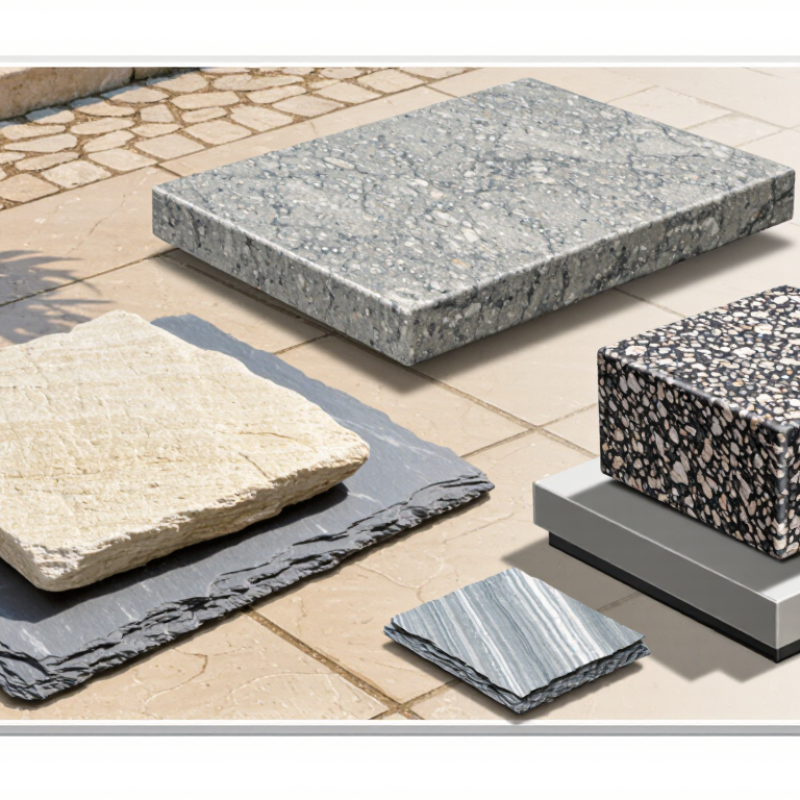
What Is the Best Stone for Outdoor Applications?

How Outdoor Conditions Affect Stone Performance

Outdoor stone is tested by more than foot traffic. Rain can seep into pores, then expand as it freezes. Water finds every weakness. In a wet, cold climate, dense stone with low water absorption often needs less protection from freeze-thaw damage. Yet density alone does not settle the choice. A smooth surface may become slick when rain leaves a thin film, while a textured finish can offer better grip. Check samples when wet, not only under showroom lights.

Sun, heat, and de-icing salts create different stresses. Dark stone can become hot under direct summer sun, and some surfaces may fade or weather unevenly over time. Near salted walkways or coastal air, ask whether the stone tolerates repeated salt exposure; test results and local installation experience matter. Shade matters, too. Drainage and joint details affect performance as much as the slab itself. A stone that suits one climate may fail elsewhere, so request absorption and slip-resistance data for the specific finish. I would not treat any single rating as a guarantee: installation, maintenance, and exposure can change the result.

Key Properties to Compare When Choosing Outdoor Stone

When comparing stone for outdoor use, start with water absorption and climate. A porous stone can darken after rain and may crack when trapped water freezes. Ask for absorption and freeze-thaw test data, then compare it with your site’s conditions. Numbers help, but they do not tell the whole story.

Slip resistance matters around steps, pool edges, and shaded paths. A polished sample may look refined indoors but become slick when wet. Compare textured finishes under wet conditions, and check how easily dirt collects in their grooves. Hardness also affects wear: grit dragged across a patio can slowly mark softer surfaces. Small scratches happen.

Heat and sunlight deserve attention too. Dark stone can grow uncomfortable underfoot in strong sun, while lighter stone may show stains more clearly. Color can vary between samples, so view several pieces outdoors at different times of day. Maintenance is another trade-off. Some stones need periodic sealing, but sealing does not make them stain-proof. I would compare care requirements with the actual use of the space, not just a product sheet. Even careful selection leaves some uncertainty; outdoor stone changes with weather, cleaning, and foot traffic.

What Is the Best Stone for Outdoor Applications? — Key Properties to Compare When Choosing Outdoor Stone
Stone Typical Hardness
(Mohs scale)
Typical Water Absorption Weather and Freeze–Thaw Performance Slip Considerations Sensitivity to Acids Outdoor Uses and Practical Notes
Granite About 6–7 Generally low; often around 0.1–0.5% by weight Often a strong choice for exposed, cold-weather settings when the specific stone is tested and suitable. Flamed, brushed, or other textured finishes usually provide better traction than polished finishes. Generally resistant to common acids, though sealers and some minerals may still be affected. Suitable for paving, steps, coping, and exterior worktops. Dense, hard-wearing varieties can be difficult to cut or install.
Quartzite About 7 Often low, but varies by stone and fissures Can perform well outdoors; confirm the specific material’s absorption and freeze–thaw test results. A natural cleft or textured finish can improve grip; polished surfaces may be slippery when wet. Usually more acid-resistant than marble or limestone, but the exact mineral composition matters. Useful for paving, steps, and wall cladding. Verify that the material is genuine quartzite and check for natural weaknesses.
Slate About 2.5–5.5 Low to moderate; varies considerably by type Some slates are durable in freezing climates; others may absorb water, flake, or delaminate. Test selection is important. Natural cleft surfaces can provide useful texture, though unevenness may affect walking comfort. Typically less acid-sensitive than marble or limestone, but mineral content varies. Used for paving, steps, and cladding. Choose dense, dimensionally stable slate rated for exterior use.
Sandstone About 6–7, depending on cementing minerals Often moderate to high; some varieties may be around 1–6% or more Performance varies widely. More porous stones can be vulnerable to water, freeze–thaw damage, and surface erosion. Textured varieties can offer good grip, but surfaces may wear or become uneven over time. Usually less prone to acid etching than calcite-rich stones, but composition varies. Common for patios, paths, and walls. Check absorption, strength, and freeze–thaw suitability before installation.
Limestone About 3–4 Low to high, depending on density and pore structure Dense varieties may work outdoors in suitable climates; porous varieties can be more vulnerable to moisture and freezing. Honed or textured finishes are generally preferable to polished finishes for outdoor walking surfaces. Acid-sensitive: acidic cleaners and substances can etch calcite-rich limestone. Used for paving, pool surrounds, and walls. Select a dense exterior grade and use pH-neutral cleaners.
Marble About 3–5 Usually low to moderate, but varies by type Some marbles can be used outdoors, but weathering, staining, and freeze–thaw performance depend on the specific stone and climate. Use a textured finish for walking areas; polished marble can be slippery when wet. Acid-sensitive: acidic liquids and cleaners can etch the surface. Best considered for sheltered or carefully selected applications. Expect more surface change and maintenance than with many harder stones.
Selection note: These are general characteristics, not guarantees for every stone. Natural stone properties vary by quarry, grade, mineral composition, finish, and fabrication. Ask for test results for the exact product—especially water absorption, flexural strength, and freeze–thaw performance—and choose a finish appropriate for the intended use and local climate.

Common Stone Types and Their Outdoor Applications

Granite suits steps, garden walls, and heavily used patios because it resists abrasion and handles weather well. Its surface can still become slick when polished, so a flamed or textured finish is often safer outdoors. Check the specific stone, not just its name; mineral content and finish affect performance. It is a dependable choice, but not always the most comfortable under strong sun.

Sandstone offers warm colors and a naturally textured feel for paths and pool surrounds. Its porosity varies, so drainage and suitable sealing matter in wet or freezing climates. Limestone creates a softer, quieter look on terraces and courtyards, though some varieties stain or wear faster. Slate works well on walkways and steps when its layers remain stable. Watch for flaking. Travertine is popular around pools, where its textured finishes can provide useful grip. Its holes may collect dirt unless filled or maintained. Before choosing, compare samples outdoors, both dry and wet. Stone can look different beside soil, water, and changing light. The less glamorous detail is upkeep. A beautiful slab that needs constant cleaning may not suit every household.

How to read this chart: Values are approximate representative Mohs hardness ratings for common minerals in each stone, not standardized measurements of whole-rock hardness. Stone composition varies by source. Hardness is one factor in outdoor suitability; climate, finish, porosity, and installation also matter.

How Installation and Maintenance Influence Durability

For outdoor stone, durability depends as much on the installation as on the material. A dense stone can still fail when water sits beneath it, freezes, and expands. The Natural Stone Institute’s Dimension Stone Design Manual stresses drainage and proper detailing for exterior stonework. In practice, a slope of about 1/4 inch per foot helps move water away from paving. Small puddles near a step are worth investigating, not ignoring.

Ask for test results, not just a stone name. ASTM C97 measures water absorption and bulk specific gravity; ASTM C880 measures flexural strength. These figures help compare samples, but they do not predict every site condition. A pale limestone beside a shaded, wet garden may weather differently from the same stone on a sunny terrace. Use a compatible, well-draining setting bed, allow movement joints, and keep drainage paths clear. Cutting corners here is expensive.

Maintenance should suit the stone, not a generic cleaner. Sweep grit before it scratches the surface, rinse away de-icing salts, and use a cleaner approved for the stone type. Sealing may reduce staining, but it cannot correct poor drainage or stop all weathering. Test any sealer on a spare piece first. I would also inspect joints after the first winter; that timing is easy to overlook.

How to Match Stone to Your Outdoor Project

The best stone depends on what your outdoor space must handle. A patio used for dining needs a stable surface and dependable grip when wet. A garden path may benefit from textured pieces that sit comfortably among soil and planting beds. For steps, check that the stone can be finished with a slip-resistant surface. Test it wet.

Climate matters, too. In areas with repeated freezing and thawing, ask about water absorption and freeze-thaw performance; trapped moisture can damage some stones over time. Granite is often chosen for its hardness, while limestone and sandstone offer softer colors but may need more careful sealing and cleaning. These are starting points, not guarantees. Stone varies by quarry, finish, thickness, and installation. Bring a sample outdoors and view it in sun and shade. A pale slab can look almost white at noon, then turn gray after rain. Consider the base beneath it, drainage, foot traffic, and maintenance you will actually do. There is no tidy winner for every project. Sometimes the most attractive option is not the most practical one, and that trade-off deserves an honest look before ordering. Check product specifications with a qualified installer, especially for exposed steps or heavily used areas.

FAQS

How can rain and freezing weather damage outdoor stone?

Water can enter pores, then expand as it freezes. Dense, low-absorption stone may handle this better. Water finds weak spots.

How should I check whether stone is slippery when wet?

Wet a sample and walk on it carefully. Compare textured and polished finishes near steps or pool edges. Check it wet.

Does dark stone become uncomfortable in sunny areas?

It can heat up under direct summer sun. Lighter stone may stay more comfortable, though it can show stains clearly.

Which stone may suit a heavily used patio or steps?

Granite often handles abrasion and weather well. A flamed or textured finish can provide better grip than a polished one.

What should I consider before using sandstone outdoors?

Its porosity varies. Check drainage and sealing needs, especially in wet or freezing climates.

Does sealing make outdoor stone stain-proof?

No. Some stones need periodic sealing, but spills and dirt can still leave marks. Small scratches happen.

Why should I view stone samples outdoors?

Soil, water, and changing daylight can alter how a sample looks. Compare several pieces, both dry and wet.

What test information should I request before choosing stone?

Ask for water-absorption, freeze-thaw, and slip-resistance data for the exact finish. Ratings help, but they are not guarantees. I would still want to see how water drains across the actual site.

Conclusion

Choosing the Best Stone For Outdoor Applications depends on how the material will perform in its specific environment. Sun exposure, rain, freeze-thaw cycles, humidity, and foot traffic can all affect a stone’s appearance and durability. When comparing options, consider water absorption, slip resistance, hardness, weather resistance, texture, and the level of upkeep required. Granite, limestone, sandstone, slate, and other natural stones each have qualities that suit different uses, from patios and walkways to steps, pool surrounds, and garden features.

Long-term performance also depends on proper installation and maintenance. A stable, well-drained base, suitable joints, and careful placement can help reduce movement and moisture damage. Regular cleaning and appropriate sealing, when needed, can preserve the stone without changing its natural character. By matching a stone’s properties to the project’s climate, function, appearance, and maintenance needs, you can make a practical choice that remains attractive and dependable outdoors.

Isabella

Isabella

Isabella is a dedicated marketing professional with a sharp focus on driving brand growth and engagement through strategic content creation. With an extensive background in digital marketing, she combines her passion for storytelling with her keen understanding of industry trends to deliver......