China Top 10 Stone Surface Slip Resistance Guide?

Time:2026-09-28 Author:Charlotte
0%

Choosing stone for a busy entrance, hotel corridor, or outdoor terrace involves more than color and price. A polished slab may look striking under showroom lights, yet feel different when rainwater reaches its surface. This China Top 10 Stone Surface Slip Resistance Guide introduces ten stone options and the practical questions buyers should ask before comparing them.

Slip resistance depends on several factors: stone type, finish, moisture, cleaning methods, and how people use the space. A honed or flamed surface can provide a different walking feel from a polished one, but no finish guarantees safety in every setting. Ask suppliers for current test documentation, including the method used and whether results apply to the exact finish being quoted. Check samples under realistic conditions. A dry showroom test is not enough. Wet shoes change things.

The guide will help readers compare common choices such as granite, slate, limestone, and textured marble, while treating each recommendation as a starting point—not a universal ranking. It will also cover surface upkeep, sample checks, and questions for fabricators and installers in China. Confirm details in writing, especially when batches, finishes, or processing locations differ. Small variations matter. And honestly, a simple top-ten list can hide important trade-offs: texture may improve grip, but it can also collect dirt or require more frequent care. Use the guide to narrow options, then verify performance for the actual site.
China Top 10 Stone Surface Slip Resistance Guide?

Understanding Slip Resistance in China’s Stone Surfaces

Understanding Slip Resistance in China’s Stone Surfaces

Slip resistance is not a fixed property of stone. It changes with surface finish, moisture, cleaning residue, slope, and footwear. In China, stone may be used in hotel lobbies, shop entrances, plazas, and stairways, where conditions differ sharply. Flamed or bush-hammered granite often provides more texture than polished stone, but texture alone does not guarantee safe footing. Rainwater tracked across a polished entrance can create a slick patch within minutes. A single test value cannot describe every real-world condition.

Tips: Ask for test results that state the method and whether testing was dry or wet. Compare like with like. Check samples under angled light, then wet a small area to see how the finish feels. Plan drainage and routine cleaning, too.

For a project, match the stone finish to its location and expected use. Outdoor steps need attention to water runoff and worn edges; indoor floors need regular removal of dust and cleaning films. Recheck high-traffic areas after installation, because use and maintenance can change surface performance. A finish that feels secure in a showroom may behave differently near a rainy doorway. I would not rely on appearance alone; that judgment is easy to get wrong.

How Stone Slip Resistance Is Tested and Rated

Stone slip resistance is measured, not guessed from appearance. A polished slab may look secure while wet, yet water can form a thin, nearly invisible film. ANSI A326.3-2021 uses the dynamic coefficient of friction (DCOF) test for hard flooring. Its benchmark is 0.42 or higher for level interior spaces expected to be walked on when wet. That is not a universal safety guarantee. The standard cautions that slope, footwear, cleaning, and use affect real-world risk. Small details matter.

Another useful method is the pendulum test, which reports a Pendulum Test Value (PTV). UK Health and Safety Executive guidance classifies PTV 36 or above as low slip potential under the tested conditions. DCOF and PTV are different measurements; their numbers should not be compared directly. Ask for the test method, wet or dry condition, stone finish, and sample direction. A honed surface and a water-wet sample can behave differently from a dry, freshly cleaned one. Test data can also miss site conditions, such as soap residue near an entrance. That limitation is easy to overlook. References: ANSI A326.3-2021; UK HSE, Assessing the slip resistance of flooring.

Comparing Ten Common Stone Surface Types

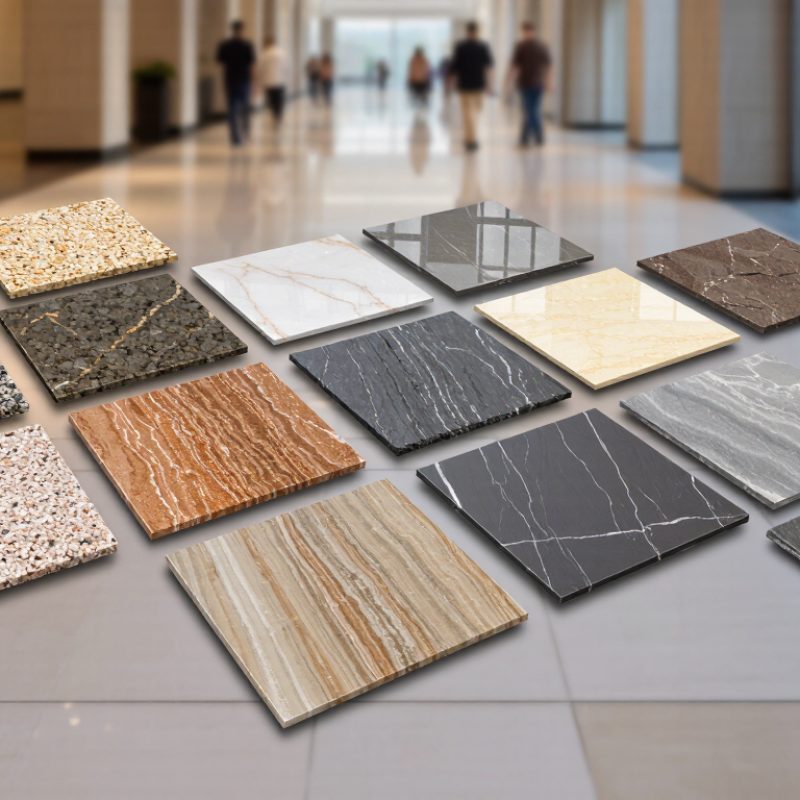
Comparing ten common stone surface types shows why the finish matters as much as the stone itself. Polished marble and polished granite are smooth and easy to wipe, but water can make them slick. Honed marble and honed limestone have a softer, matte texture, though neither guarantees traction when wet. Brushed limestone adds shallow grooves; dirt can settle there. Filled, honed travertine is more even underfoot, while tumbled travertine has rounded edges and a visibly uneven surface. Cleft slate offers natural texture, but its ridges may complicate cleaning. Flamed granite and sandblasted sandstone feel rougher and are often considered for exposed, wet areas.

Numbers need context. The UK Health and Safety Executive’s GEIS2 guidance uses the pendulum test and classifies Pendulum Test Values (PTV) of 36 or more as low slip potential, 25–35 as moderate, and below 25 as high. These are risk categories, not guaranteed scores for particular stones. A caveat: one slab can behave differently after sealing, wear, or soap buildup. Ask for wet-condition test results for the specified finish, not a generic stone name. Small samples can mislead. Test a representative installed area when possible, and reassess after cleaning products or surface treatments change.

Factors That Change Traction in Real-World Conditions

A stone surface rarely has one fixed slip-resistance value. Water, soap, cooking oil, and fine dust can change traction within minutes. A polished lobby may feel secure when dry, then become slick beneath wet shoes. The detail matters. Surface texture, slope, foot traffic, and cleaning residues also affect grip. Repeated wear can smooth raised texture, especially along busy paths.

Testing helps, but results need context. ANSI A326.3-2021 recommends a wet dynamic coefficient of friction (DCOF) of at least 0.42 for level interior spaces expected to be walked on when wet. The standard also warns that this value does not predict safety in every condition. The UK Health and Safety Executive’s flooring guidance classifies pendulum test values of 36 or higher as low slip potential, 25–35 as moderate, and below 25 as high for shod conditions. These test methods are not interchangeable. A useful site check records the test method, stone finish, contaminants, and cleaning routine. Yet one test still misses a rainy-day rush, a worn stair edge, or a patch of detergent left behind. Real floors are less tidy than reports.

Choosing and Maintaining Stone for Safer Surfaces

China Top 10 Stone Surface Slip Resistance Guide?
Choosing and Maintaining Stone for Safer Surfaces

Stone safety depends on finish, moisture, footwear, and upkeep—not appearance alone. A polished lobby may look immaculate, yet become slick when rainwater tracks across it. Small details matter. Specify the stone and finish for the actual location, then request slip testing on a representative sample.

ANSI A326.3 sets a wet dynamic coefficient of friction (DCOF) criterion of 0.42 for level interior spaces expected to be walked on when wet. This is a test benchmark, not a guarantee against falls. The standard cautions that DCOF alone cannot predict performance in every setting, especially on slopes or where contaminants are present. Ask the testing laboratory to document conditions and results.

Maintenance can change surface behavior. Follow stone-specific care guidance from the Natural Stone Institute: use a suitable neutral cleaner, remove grit before mopping, and blot spills promptly. Avoid leaving detergent film near entrances; it can feel slippery underfoot. Water changes everything. Sealer may help resist staining, but it does not make stone slip-proof. Recheck busy thresholds and worn finishes periodically. I would treat any single test result as a snapshot, not a permanent safety certificate.

Stone Surface Slip Resistance Guide: Wet DCOF Benchmark

ANSI A326.3 uses a wet DCOF value of 0.42 as a benchmark for applicable level interior floors expected to be walked on when wet. This is not a stone-specific rating or a guarantee against slipping. Actual suitability depends on the stone, finish, installation, contaminants, and maintenance; check the product’s test data for its intended use.

FAQS

Does stone have a fixed level of slip resistance?

No. Moisture, finish, slope, cleaning residue, and footwear can all change how it feels underfoot. One test cannot cover every condition.

Which stone finishes may provide more texture?

Flamed granite and bush-hammered granite often feel rougher than polished stone. Brushed limestone has shallow grooves, while cleft slate has natural ridges. Roughness alone does not guarantee safe footing.

Can polished stone become slippery near an entrance?

Yes. Rainwater tracked across a polished floor can create a slick patch within minutes. A thin water film may be hard to see.

What should a stone slip-resistance test report include?

Ask for the test method, wet or dry condition, surface finish, and sample direction. Compare results from similar conditions. Otherwise, the numbers may mislead.

What do DCOF and PTV results mean?

A DCOF result of 0.42 or higher is a benchmark for certain level, wet-use interiors. A PTV of 36 or above indicates low slip potential under tested conditions. They are different measurements, so do not compare their numbers directly.

Are matte or textured stones always safer when wet?

No. Honed marble and limestone may feel less smooth, but neither guarantees traction. Dirt can collect in brushed grooves, and rough surfaces may be harder to clean.

How can a sample be checked before installation?

View it under angled light, then wet a small area and feel the finish carefully. A showroom sample may not behave like a rainy doorway. Small samples can mislead.

How should stone floors be maintained and reassessed?

Remove dust and cleaning films indoors, and check drainage and worn edges on outdoor steps. Recheck busy areas after installation or surface treatments. I would not rely on appearance alone.

Conclusion

This Stone Surface Slip Resistance Guide explains how traction affects the safety and usability of stone floors in homes and public spaces. It introduces common ways stone slip resistance is tested and rated, then compares ten widely used surface types, highlighting how their texture and finish can influence grip. Rather than treating any stone as automatically safe or slippery, the guide shows how performance depends on the surface and the conditions in which it is used.

Real-world traction can change with moisture, dust, wear, cleaning methods, and surface treatments. The guide outlines practical considerations for choosing stone in areas where slipping is a concern and for maintaining its texture over time. By weighing test ratings alongside everyday conditions and care requirements, readers can make more informed choices for safer, longer-lasting stone surfaces.

Charlotte

Charlotte

Charlotte is a seasoned marketing professional with a deep understanding of the company's portfolio and a passion for elevating its presence in the market. With a keen eye for detail and a commitment to excellence, she ensures that our professional blog is regularly updated with insightful articles......