Calculating stone weight in 2026 requires more than multiplying volume by density. It requires a clear understanding of how stone behaves inside a real structure. Granite, limestone, marble, and sandstone can differ greatly in density, porosity, moisture absorption, and strength. Those differences directly affect dead loads, support reactions, transport limits, and installation safety.
John Ochsendorf, a leading authority on masonry and structural design, has emphasized a vital principle: “Stone is a material that wants to be in compression.” That idea guides reliable Stone Weight And Structural Considerations. A stone slab may look stable on a warehouse floor, yet behave differently when fixed to a façade. Thin supports, uneven joints, or trapped moisture can change the load path. Small errors matter.
This guide explains practical calculation methods for stone weight and structural loads. It examines density values, volume measurements, unit conversions, live loads, wind pressure, seismic effects, and connection forces. It also shows why a simple estimate should never replace a site-specific engineering review. A 2,000-kilogram block creates different risks from 2,000 kilograms distributed across a reinforced platform.
Field experience often reveals uncomfortable details. Drawings may omit hidden voids. Stone may arrive wetter than expected. Existing concrete may be weaker than its original specification. That assumption can fail. For this reason, responsible calculations should include verified dimensions, realistic material data, suitable safety factors, and inspection records. Local building requirements also matter. A qualified structural engineer should confirm final designs before fabrication, lifting, or installation begins.
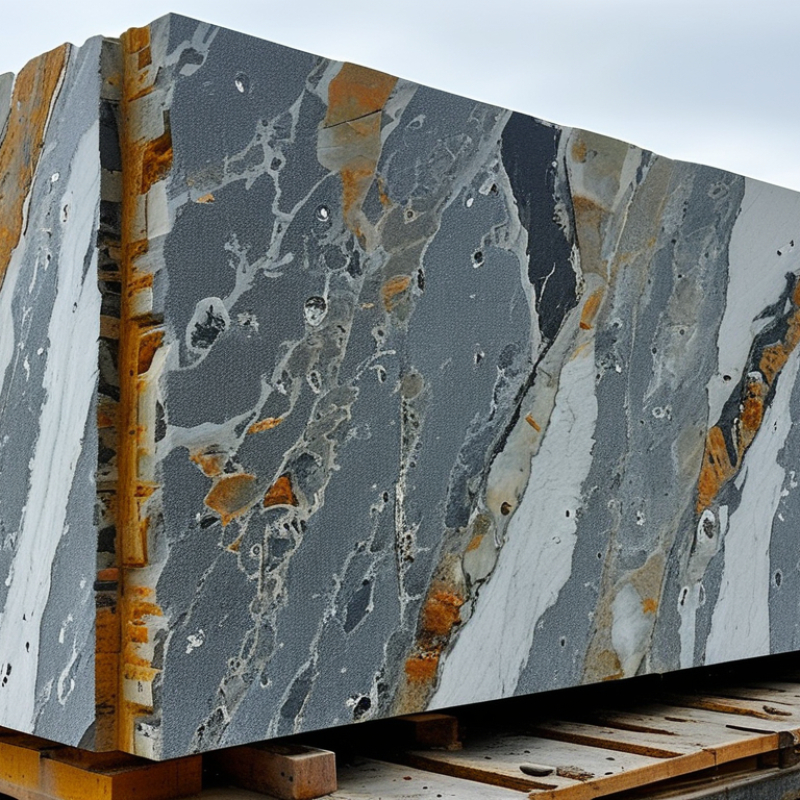
In 2026, reliable stone load estimates begin with two definitions: stone type and density. Granite, marble, limestone, and sandstone each have different typical densities. Some limestone is light and porous. Dense granite can weigh much more. Stone is never perfectly uniform. Moisture, veins, cavities, and surface finishes can change the result.
Use bulk density, measured in kilograms per cubic metre (kg/m³), rather than mineral density alone. For imperial projects, pounds per cubic foot (lb/ft³) may be required. Record slab dimensions in millimetres or metres. Convert them carefully before calculating volume. The basic formula is simple: weight equals volume multiplied by density. A slab measuring 2 m by 1 m by 0.03 m has a volume of 0.06 m³. At 2,700 kg/m³, its estimated mass is 162 kg.
Measure the complete assembly, not only the visible stone. Include mortar, adhesive, framing, anchors, backing boards, and trapped moisture. Structural loads are commonly expressed in kilonewtons (kN) or kilonewtons per square metre (kN/m²). Divide total weight by the supported area to estimate the permanent surface load. A calibrated scale and current supplier test data improve confidence. Quarry samples can still vary. That matters.
I have seen drawings use “stone weight” without stating the density source. That omission weakens an otherwise careful design. When data conflicts, document the assumption and request testing from a qualified structural professional. A neat number can still be wrong.
Use the following typical density ranges for preliminary estimating only. Actual stone weight can vary with quarry source, mineral composition, porosity, moisture content, finish, and fabrication. Final structural design should use tested project-specific values and applicable building codes.
| Stone Type | Typical Density (kg/m³) |
Typical Density (lb/ft³) |
Unit Weight (kN/m³) |
Weight at 20 mm (kg/m²) |
Weight at 30 mm (kg/m²) |
Weight at 50 mm (kg/m²) |
Common Applications |
|---|---|---|---|---|---|---|---|
| Granite | 2,600–2,800 | 162–175 | 25.5–27.5 | 52–56 | 78–84 | 130–140 | Cladding, paving, countertops, stairs, retaining elements |
| Limestone | 2,200–2,600 | 137–162 | 21.6–25.5 | 44–52 | 66–78 | 110–130 | Facade panels, masonry, paving, interior finishes |
| Marble | 2,600–2,800 | 162–175 | 25.5–27.5 | 52–56 | 78–84 | 130–140 | Flooring, wall panels, stairs, countertops, decorative work |
| Sandstone | 2,100–2,400 | 131–150 | 20.6–23.5 | 42–48 | 63–72 | 105–120 | Cladding, paving, landscape walls, architectural masonry |
| Slate | 2,700–2,900 | 169–181 | 26.5–28.4 | 54–58 | 81–87 | 135–145 | Roofing, flooring, wall cladding, paving |
| Basalt | 2,800–3,100 | 175–193 | 27.5–30.4 | 56–62 | 84–93 | 140–155 | Heavy-duty paving, curbs, stairs, structural and landscape elements |
| Travertine | 2,300–2,500 | 144–156 | 22.6–24.5 | 46–50 | 69–75 | 115–125 | Flooring, wall tiles, facade panels, pools and landscape features |
Conversion factors used: 1 kg/m³ = 0.06243 lb/ft³; unit weight in kN/m³ = density in kg/m³ × 9.80665 ÷ 1,000. Estimated surface weight assumes a solid, uniform stone layer with no voids, joints, adhesive, anchors, or support framing.
| Measurement | Metric Unit | Imperial Unit | Typical Use | Conversion or Definition |
|---|---|---|---|---|
| Length | mm, cm, m | in, ft | Stone thickness, panel dimensions, joint spacing | 1 in = 25.4 mm; 1 ft = 0.3048 m |
| Area | m² | ft² | Flooring, paving, cladding, countertops | 1 m² = 10.764 ft² |
| Volume | m³ | ft³ | Solid blocks, masonry, bulk stone quantities | 1 m³ = 35.315 ft³ |
| Mass | kg, metric tonne | lb, short ton | Fabrication, transport, lifting, handling | 1 metric tonne = 1,000 kg = 2,204.62 lb |
| Density | kg/m³ | lb/ft³ | Converting stone volume into mass | Density = mass ÷ volume |
| Unit Weight | kN/m³ | lb/ft³ | Structural dead-load calculations | Unit weight = density × gravitational acceleration |
| Distributed Load | kN/m² or kPa | psf | Load imposed by stone on slabs, walls, and supports | 1 kPa = 20.885 psf; 1 psf = 0.04788 kPa |
| Point Load | kN | kip or lbf | Support reactions, anchors, brackets, lifting points | 1 kN = 224.81 lbf = 0.22481 kip |
| Calculation Step | Formula | Result |
|---|---|---|
| Panel dimensions | 1.20 m × 0.60 m × 0.03 m | Area = 0.72 m²; Volume = 0.0216 m³ |
| Assumed granite density | Mid-range value from 2,600–2,800 kg/m³ | 2,700 kg/m³ |
| Panel mass | 0.0216 m³ × 2,700 kg/m³ | 58.32 kg |
| Panel self-weight | 58.32 kg × 9.80665 ÷ 1,000 | 0.572 kN |
| Distributed dead load | 0.03 m × 26.48 kN/m³ | 0.794 kN/m², approximately 0.79 kPa |
| Approximate imperial surface load | 0.794 kPa × 20.885 | 16.6 psf |
Values are representative engineering ranges for common natural stones. Verify the selected stone using the supplier's technical data, laboratory testing, moisture condition, anchorage design, and the governing structural requirements before construction.
Multiply length, width, and thickness in metres.
Multiply the stone volume by its density. For example, 0.0432 m³ of granite at 2,650 kg/m³ weighs about 114.5 kilograms.
Granite often ranges from 2,600 to 2,800 kg/m³. Marble is near 2,700 kg/m³, while limestone may be about 2,300 kg/m³. These are estimates.
No. Density varies between quarries, pieces, and moisture conditions. Use tested project data when possible. Small differences matter.
Mass describes the stone quantity in kilograms. Structural load describes the force transferred to the supporting structure.
Include adhesive, mortar, framing, rails, insulation, moisture, and fasteners. Temporary supports may also affect construction loads. Wet assemblies can surprise you.
Continuous bearing spreads the load across a larger area. A narrow ledge creates greater line pressure. Point brackets create concentrated reactions at anchors and beams.
Check the supporting wall, floor, frame, anchors, bearing, bending, and deflection. Review openings and support spacing carefully. A spreadsheet estimates weight. It cannot confirm safety.
Calculating stone weight and structural loads in 2026 begins with identifying the stone type, its density, and the measurement system being used. Different materials can vary considerably in density, so accurate classification is essential. Measure the stone’s length, width, and thickness, then calculate its volume using the appropriate geometric formula. For irregular pieces, divide the shape into simpler sections or use a reliable volume estimate.
Once the volume is known, multiply it by the material’s density to determine the stone’s approximate weight. This value can then be used to estimate dead loads, considering how the stone is supported, distributed, and connected to the surrounding structure. Stone Weight And Structural Considerations should also include practical factors such as support spacing, load paths, and installation conditions. Finally, apply suitable safety factors to account for measurement uncertainty, material variation, and long-term performance, and confirm that the supporting structure has adequate load capacity.

 Jieda Stone